Blog
Boiler Installation FAQs: What UK Homeowners Need to Know
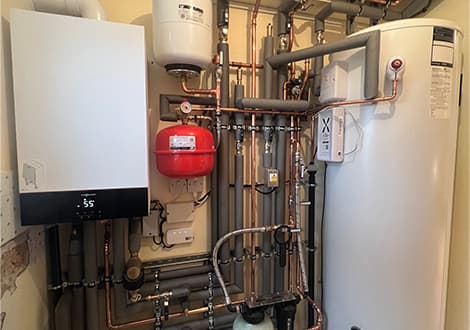
Boiler installation: the answers to the questions most homeowners ask
Considering a new boiler installation is a significant investment, and it's important to make informed decisions regarding the type and model of the unit that you want to install. But how do you go about achieving this objective? Below, we've provided a brief FAQ to answer some of your most pressing questions.
How does a boiler work?
Your boiler sits at the heart of your central heating system, sending heat and hot water to the radiators, taps or underfloor heating in your home. Each boiler has various components depending on its type and design, although as a general rule these units will burn a mixture of gasses together in a pressure vessel that provides a viable source of heat throughout the property. Typical parts include the burner, heat exchanger, pump, valves and expansion vessel.
Which types of boiler are available and how do they differ?
From conventional and system boilers to modern combi units, there's a growing number of boiler types currently available in the UK. Whilst compact and self-contained units are the most popular and help you to save space in the home, both conventional and system boilers also offer advantages in certain circumstances.
- Combi boilers are compact, self-contained units that heat water on demand and control central heating from a single appliance. They eliminate the need for separate hot or cold-water storage tanks, which makes them popular in modern and smaller homes.
- System boilers work with a separate hot-water cylinder and integrate many components into the boiler itself. They suit properties with higher hot-water demand where stored hot water is useful.
- Conventional (or regular) boilers require both hot and cold-water tanks and a hot-water cylinder. They are often selected for larger or older properties where multiple bathrooms demand stored hot water.
What are the benefits of a combi boiler?
A combi boiler is a self-contained unit that controls the whole of your central heating system from a single point. The compact nature of combi boilers certainly makes them popular amongst modern homeowners, whilst these units also negate the need to install additional cold or hot water tanks. Key advantages:
- Compact, wall-mounted units remove the need for separate tanks or cylinders.
- Instant hot water on demand — no waiting for a cylinder to heat up.
- Most contemporary, A-rated boilers are also combi units, with these condensing models considered to be up to 35% more efficient than older and non-condensing alternatives.
Should I choose an energy-efficient (A-rated) boiler?
Whilst this type of A-rated unit may cost a little more to purchase and install, it has the potential to deliver huge savings over time. The reason is simple: energy-efficient boilers are all condensing units that boast larger heat exchangers, enabling them to recover far more heat. This reduces consumption and the cost of your monthly energy bills, whilst helping to maintain the optimal performance of your boiler for much longer.
How long will a boiler last?
The general lifespan of a unit is around 10 to 15 years. However, you can also access A-rated boilers from premium brands that last for up to 20 years, with these units typically benefitting from extended manufacturers' warranties. By the time a boiler reaches the typical lifespan it often becomes so inefficient that buying a new one is more cost-effective and environmentally friendly.
What shortens a boiler's life?
When you take a look inside a boiler, it consists of various parts and components such as pumps, valves and expansion vessels. All of these components, regardless of their quality, wear out at different times over the years. In addition, boilers alternate between hot and cold, which means they are continuously expanding and contracting, causing pipes and joints to become fatigued and stressed. Things that affect the lifespan of your boiler:
- Not getting it serviced annually.
- A build-up of limescale.
- Corrosion.
Why choose Pipeline Plumbing Services Ltd?
At Pipeline Plumbing Services, our experienced engineers have been installing new boilers for more than 38 years, during which time we've built a solid base of satisfied customers. Our engineers are Gas Safe-registered too, which means that they're fully qualified to work in your home whilst delivering an incredibly high standard of service. So, if you're based in Pulborough or the surrounding areas, we're ideally placed to manage your new boiler installation with the minimum of fuss.
To learn more about us or ask any other boiler installation questions that you may have, give us a call on either 01903 740538 or 07871 725133, or email us at info@pipelineplumbingservices.co.uk.
Learn more about our boiler installation service or get in touch to discuss options for a new boiler or servicing.
Other Articles


